The Six-Week Season: How Holiday Lighting Crews Get Their Hours Back
Every install is a quote, a date and a callback, and they all land in the same six weeks. What changes when the panel holds the schedule and Claude does the writing.

Patrick Roden
Founder, DevForge Academy
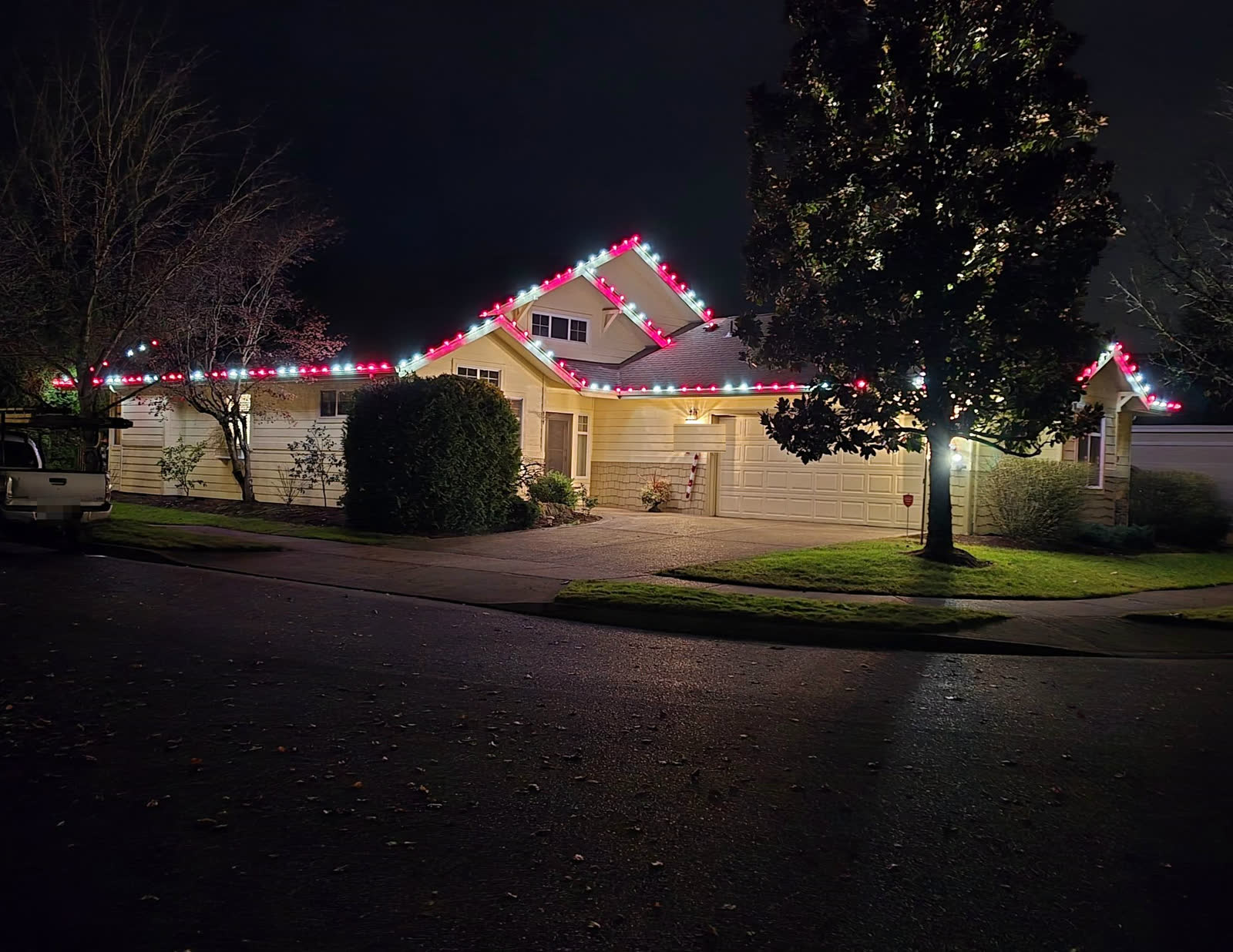
Half past four in November, and it is already dark.
You are on a ladder with a string of C9s and a cold clip gun, and your phone has eleven missed calls on it. Every one of them is somebody who wants a quote, or wants to know which day you are coming, or wants you back because a section went out.
That is the lighting season. It is six weeks long, it is most of your Q4, and the work is not the hard part — the work is a ladder and a clip and a steady hand. The hard part is that every install is three separate conversations and they all land at once.
Three conversations per house, and there is no fourth week to do them in
A pressure-washing job is a quote and a visit. A lighting install is:
- The quote — usually from a photo and a roofline you have not measured yet
- The date — and the date is the whole product, because nobody wants lights on the 27th
- The callback — a run goes dark, a clip lets go in the first storm, and you go back
In July that is fine. In the last week of November, thirty houses each having three conversations is ninety conversations, and you are on a ladder for eight hours of the day they happen in.
Then in January every one of them comes down again.
The two piles, in the season that punishes you for mixing them
Everything you do still falls into one of two piles, and the season makes the split sharper rather than softer.
Changing what customers see. Your lighting service page. The dates you are still taking. The ZIPs you will drive to in December. The gallery from last week's install.
Running the business. The quotes, the scheduling replies, the "we are on for Thursday" texts, the callback triage, the January takedown reminders.
The first pile lives in your CMS ops panel. The second lives in Claude.
| | Changing what customers see | Running the business |
|---|---|---|
| Where | Your CMS ops panel | Claude |
| What comes out | A change to your live site | A quote, a message, a schedule note |
| The check | A preview, then you approve | You read it before you send |
| When it is wrong | Caught before anyone sees it | Already in someone's inbox |
Read the last row twice, because in December it costs more. A wrong date on your site is embarrassing. A wrong date in a text to a customer is a truck in the wrong driveway on a Saturday in the dark.
The panel is twenty-six pages, and in this season five of them matter
There are twenty-six pages in the panel. Most weeks you touch three. In the lighting season it is these:
- Services and pricing — the lighting service, what a run includes, what a two-storey costs, what the takedown costs, and whether takedown is bundled or separate
- Locations — the ZIPs you will actually drive to in December, which are not the ZIPs you drive to in July
- Content — the gallery from last night's install, and the FAQ that answers "do you take them down"
- Media — those same photos, and the reels and captions they become. See turning job photos into a reel
- How customers reach you — the form, and the calendar that says which dates are gone
That last one is the whole season in one screen. If your site says you are still taking December dates and you are not, every quote you write that week is a quote you cannot honour. Changing that used to mean emailing somebody. It is now a field.
Two evenings
The quote, from the driveway
You are parked outside a two-storey with a gable you can see from the street. The homeowner wants a number tonight because three other companies have not called back.
Before: you take a photo, you drive home, you measure off the photo at nine at night, you dig out what the last one like it went for, you write it up, and it goes out Wednesday. By Wednesday they have booked whoever answered Monday.
After: the photo and the roofline notes go in against your own rate sheet — ranges, dated, written down once — and the draft comes back with your inclusions already right: the run, the clips, the timer, whether the takedown is in the price. The number is still yours. What changed is that everything around the number was already written.
One firm rule, and the season makes it sharper. The price does not come from Claude. It comes from your rate sheet. A made-up per-foot number in a six-week season is not one bad job — it is the number you then quote thirty times before you notice.
The month of posts, done in one sitting
Every install you do in this season photographs well. That is rare and it does not last — a clean driveway is not a photo, but a lit roofline at night is.
One sitting with the week's photos gets you the posts, the captions, and the gallery entries. The rules differ by platform and it matters: Google Business Profile and Facebook take no hashtags — they read as spam there — while Instagram wants five to eight on a new line and TikTok three to five.
Before, you posted when you remembered, which in the busiest six weeks of your year means never. And this is the season when people are actively looking.
And the phone rings in October, not December
The quiet one.
Your lighting service page, written properly and live in September, is what gets found in October. The FAQ that answers "do you do takedown" is what stops the call that was never going to book. The gallery from last season is what makes somebody choose you over the guy with no photos.
None of that is glamorous, all of it is what search engines read, and all of it has to be done before the season starts — because once you are on a ladder six days a week you are not editing a service page.
The panel has a page that tells you which of your pages are thin, missing a description, or have not been touched in a year. Work that list down in August. The phone rings in October and you will not be able to point at the day it started.
Where to start
Ask the blunt question of anything on your list: if I got one hour back here, what would it be worth?
- Rewriting the About page — worth something, once, and it is already written.
- Getting a lighting quote out the same evening instead of three days later — worth the job, and in a six-week season worth the next four jobs too.
- Answering a review within a day — worth every future customer who reads it.
- Having the December dates right on the site — worth every quote you do not have to walk back.
Effort pays where work is repeated, time-sensitive, or not happening at all. A lighting season is all three at once, which is exactly why it is the season worth fixing first.
The track
The Tenant Provider Onboarding track is free, public, and written for the person who runs the business — not for the person who built the software. Fifteen lessons in order, and you can stop the moment it is doing what you needed.
Start at lesson one. It is the two-piles split, and in a six-week season it is the one that keeps a truck out of the wrong driveway.